
Tackling Barriers to Outdoor Play: How Miracle Delivers Fun, Inclusive Playgrounds that are Built to Last
Tackling Barriers to Outdoor Play: How Miracle Delivers Fun, Inclusive Playgrounds that are Built to Last
Many of us might have spent entire summer days outdoors in our youth, returning home only for meals and sleep. However, today’s children are more likely to struggle to find opportunities for unstructured outdoor play. Just 27% of children said they regularly play outside their homes, compared to 71% of the baby boomer generation (Save the Children, 2022).
Here, we explore how ESGmark® certified play area specialist Miracle Design & Play works to tackle some of the barriers to providing spaces where children can play and connect.
BARRIERS TO OUTDOOR PLAY
Several factors have converged to create what researchers often term “the indoor generation.” In addition to the obvious pull of mobile phones and online content, which has made indoor activities increasingly appealing, for many children, organised activities have also replaced free play.
Add to this the fact that urban planning planners are prioritising housebuilding over parks (Ranken et al., 2025) and increased academic pressure meaning longer school days and more homework, it’s not difficult to see what’s contributed to this change in leisure time.
A recent study by the University of Sheffield also highlighted inequalities in access to play spaces, revealing that in some regions, there are five times more children per playground than others, with deprived communities often having fewer, smaller, and more distant play spaces (Brindley et al., 2025).
BENEFITS OF OUTDOOR PLAY FOR CHILDREN AND WHY THOUGHTFUL PLAYGROUND DESIGN MATTERS
Opportunities for unstructured play, especially outdoors, promote positive self-esteem, autonomy, and confidence in children. In addition, experts say that diminishing time for outdoor play can unintentionally increase long-term risks linked to sedentary lifestyles, and a lack of connection with the natural environment (Bento & Dias, 2017).
Well-designed, sustainable playgrounds play a vital role in supporting children’s physical, social, and emotional development, while also delivering lasting benefits for communities and the environment (Schipperijn et al., 2024; Lee et al., 2025). They encourage regular movement, imaginative play, and positive risk-taking, all of which contribute to long-term health outcomes.
A recent £18 million investment to refurbish 200 new playgrounds across England reflects the growing demand for high-quality play provision and the importance of creating and maintaining spaces that are inclusive, accessible and built for long-term use (Play England, 2025).
High-quality, inclusive playground design supports strength, coordination, and physical fitness, creativity, confidence, and independence, and teamwork, empathy, and problem-solving skills. But beyond individual benefits, playgrounds designed with inclusivity in mind strengthen communities. They create shared spaces where children of all abilities can play together, families connect, and neighbourhoods become safer and more cohesive.
HOW MIRACLE DESIGNS INCLUSIVE, SAFE OUTDOOR PLAY AREAS FOR CHILDREN

Miracle Design & Play helps meet this need by delivering playgrounds that are designed for fun and built to last. With extensive experience in the play industry, Miracle specialises in the design and supply of outdoor play areas, creating spaces that combine creativity, durability, and long-term social value. The company’s commitment to delivering positive impact for the communities in which they work is underscored by their ESGmark® Certification, awarded to Miracle based on is strong Environmental, Social, and Governance (ESG) approach.
“We don’t just build play areas, we build open spaces for communities to grow,” explains Laura Buckley, Compliance Officer at Miracle. “Our work helps create safe, inspiring environments where families connect, children develop, and neighbourhoods thrive. That’s the real joy of what we do, and why we put so much care into every detail.”
Since 2000, Miracle has delivered more than 3,000 playgrounds across the UK, completing around 250 projects each year. Its bespoke design service ensures every project responds to site-specific play requirements, resulting in innovative, engaging spaces tailored to each setting.
Miracle believes the best play areas are built on strong partnerships, so the team work closely with schools, local authorities, developers, and communities to deliver imaginative, safe outdoor play areas that balance playful design with practicality. All projects are delivered to exacting safety standards and at sensible prices, giving clients confidence that their play spaces are engaging, reliable, and built to last.
DESIGNING PLAY THAT MAKES A DIFFERENCE
Inclusive design is central to every project, with layouts that integrate natural elements and green spaces wherever possible. Miracle’s playgrounds encourage all children, including wheelchair users as well as neurodiverse children, to play together, supporting confidence, social interaction, and equality of access. Collaboration with local partners ensures each space reflects community needs and delivers meaningful social value.
"At Miracle, we know that play is more than fun. It’s essential for healthy development, sparking creativity, building confidence, and learning important life skills. So, we really focus on designing inclusive play spaces that support children's cognitive, physical, social and emotional skills,” explains Laura.
CASE STUDY: EAGLE’S REST
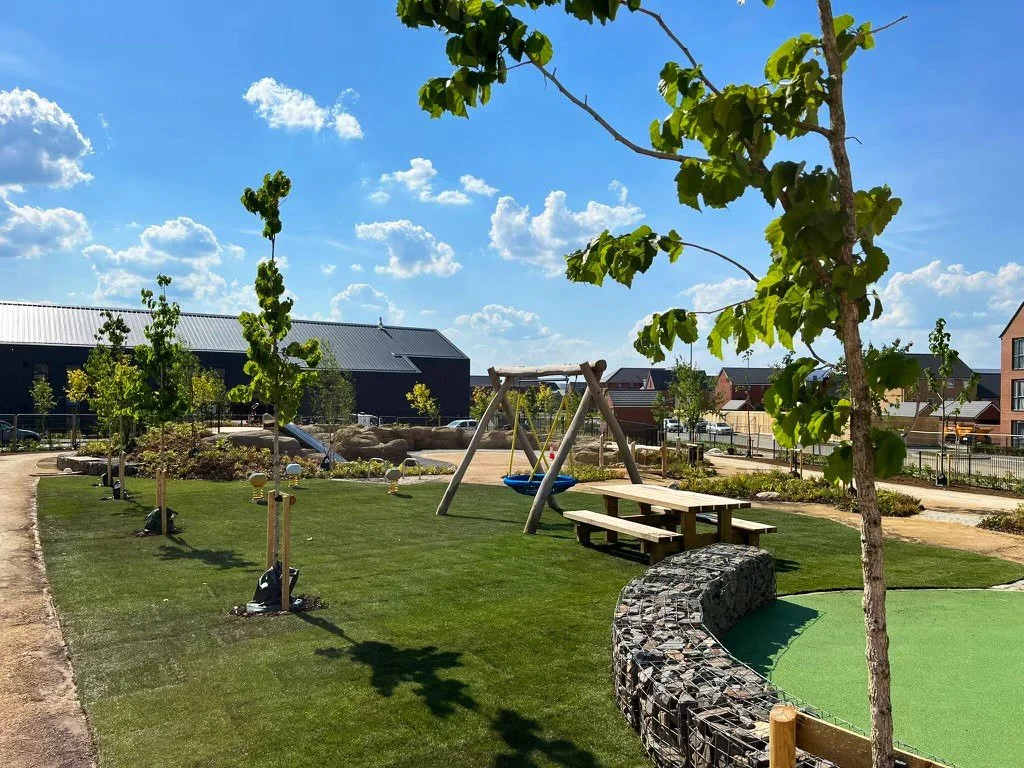
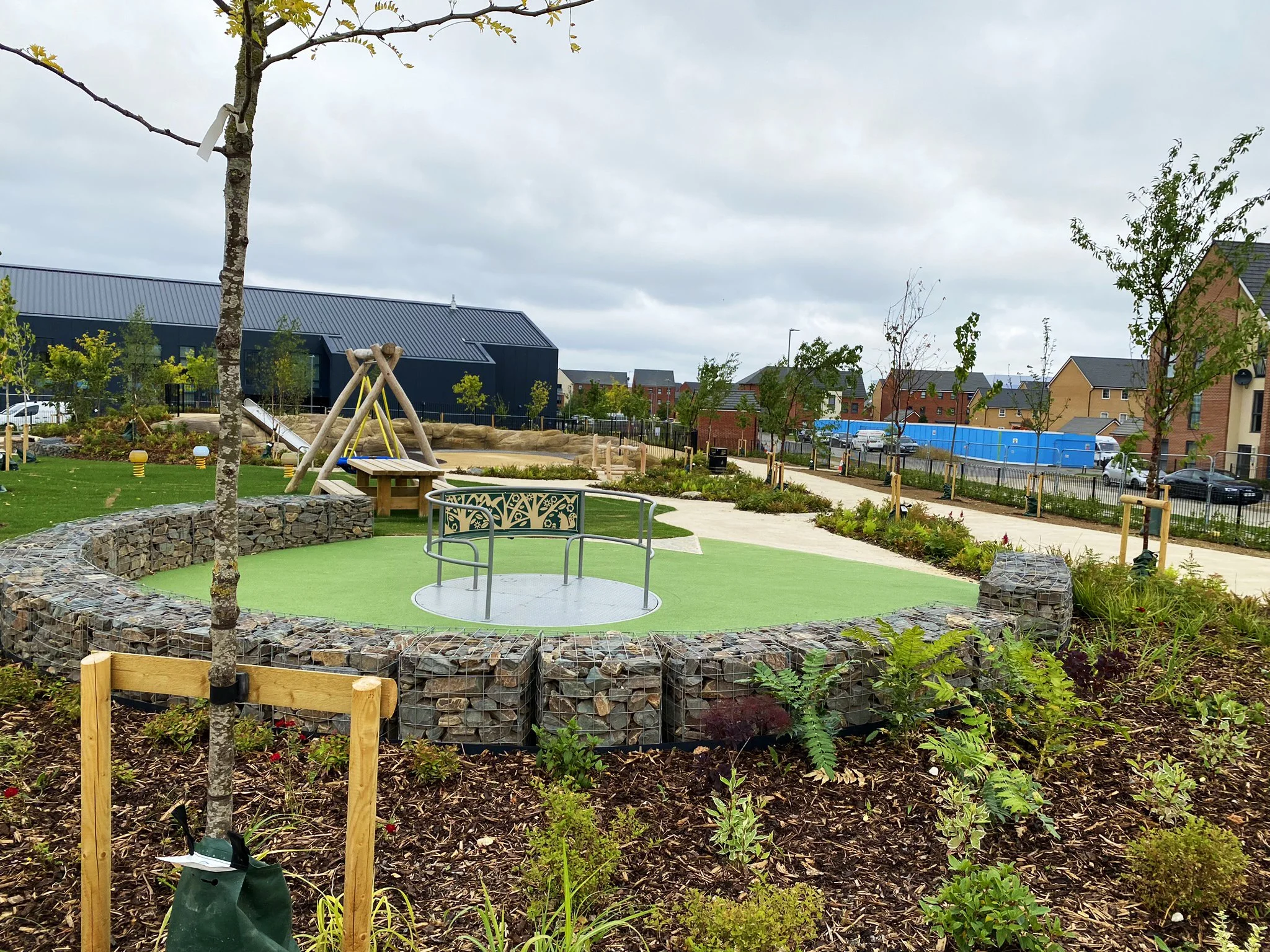
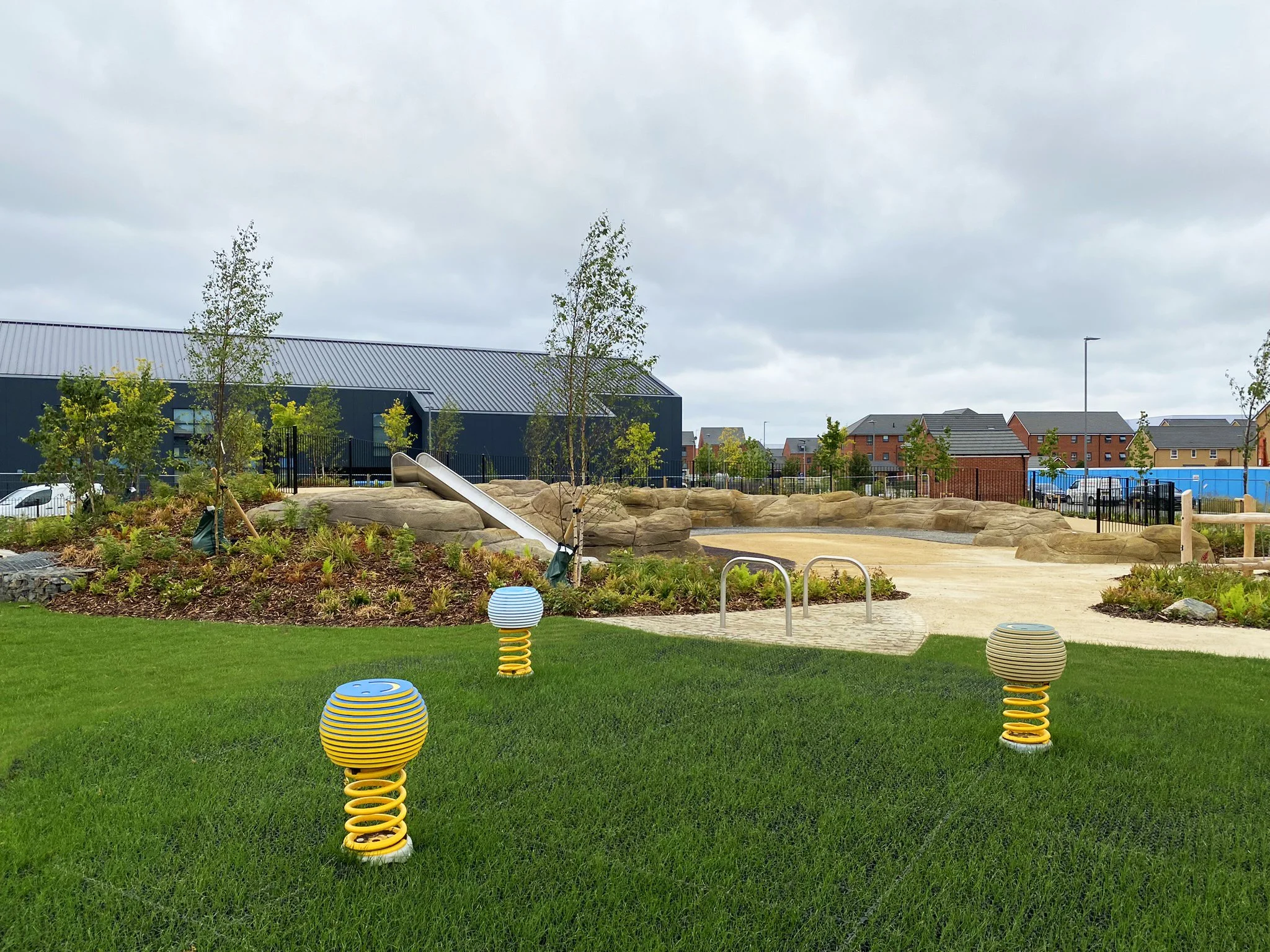
Eagles Rest in Wavendon was a complex, multi-level landscaped site with full accessibility requirements, a basketball court, a BMX track, and a custom rock-climbing feature. By including a wheelchair accessible roundabout, a double-width slide with ramped access, a basket swing for all abilities, sensory, spring orbs and ensuring DDA-compliant access throughout, Miracle ensured that it was accessible to all.
In addition, Miracle works with trusted suppliers and provides transparent project management and long-term maintenance planning, delivering a fully integrated service covering design, installation, inspection, and handover and making the process easy for developers. Through its focus on accessible, imaginative play spaces, Miracle supports increased community use, improved daily physical activity and well-being, and inclusive spaces that build confidence, social cohesion, and engagement. By engaging with local groups and prioritising local needs, the company helps reduce inequalities in access to safe outdoor play while ensuring projects align with ESG best practice.
By creating accessible, safe, and inclusive spaces that are designed for fun and built to last, Miracle Design & Play helps every child explore, connect, and grow.
ABOUT MIRACLE DESIGN AND PLAY
Established in 2000 and headquartered in Northampton, Miracle stands as a specialist market leader in the design and supply of outdoor play areas across the UK. Miracle was awarded the ESGmark® Certification in 2024, recognising its commitment to responsible business practices across Environmental, Social, and Governance (ESG) areas.
Sources
Bento, G. and Dias, G. (2017) ‘The importance of outdoor play for young children’s healthy development’, Porto Biomedical Journal, 2(5), pp. 157–160. doi: 10.1016/j.pbj.2017.03.003. Available at: https://pmc.ncbi.nlm.nih.gov/articles/PMC6806863/
Brindley, P., Ma, Y., Wang, R., Martin, M. and Woolley, H. (2025) ‘To Play or Not to Play: Mapping Unequal Provision of Children’s Playgrounds’, Land, 14(3), p. 477. doi: 10.3390/land14030477. Available at: https://www.mdpi.com/2073-445X/14/3/477
Lee, EY., de Lannoy, L., Kim, YB., Rathod, A., James, ME., Lopes, O., Nasrallah, B., Thankarajah, A., Adjei-Boadi, D., de Barros, MIA., Duncan, S., Miller, RM., Mygind, L., Vanderloo, LM., Wang, PY., Tremblay, MS. and AOP10 Steering Committee Group. (2025) ‘2025 Position Statement on Active Outdoor Play’, International Journal of Behavioral Nutrition and Physical Activity, 22, 117. https://pmc.ncbi.nlm.nih.gov/articles/PMC12462132/
Play England (2025) Play England’s national leadership helps secure £18m in the Budget for England’s play areas. Available at: https://www.playengland.org.uk/newsblog/play-englands-national-leadership-helps-secure-18m-in-the-budget-for-englands-play-areas
Ranken, E., Seims, A., Hauari, H., Christie, N., Barber, S. E. and Cameron, C. (2025) ‘Designing play into urban environments: strategic‑level challenges and best practice in Bradford and Tower Hamlets, UK’, Cities & Health, pp. 1–14. doi: 10.1080/23748834.2025.2539612. Available at: https://www.tandfonline.com/doi/full/10.1080/23748834.2025.2539612
Save the Children (2022) Children today far less likely to play outside than their grandparents. Available at: https://www.savethechildren.org.uk/news/media-centre/press-releases/2022/children-today-far-less-likely-to-play-outside-than-their-grandparents
Schipperijn, J. et al. (2024) ‘The role of playgrounds in promoting children’s health – a scoping review’, International Journal of Behavioral Nutrition and Physical Activity, 21(1), 72. Available at: https://link.springer.com/article/10.1186/s12966-024-01618-2